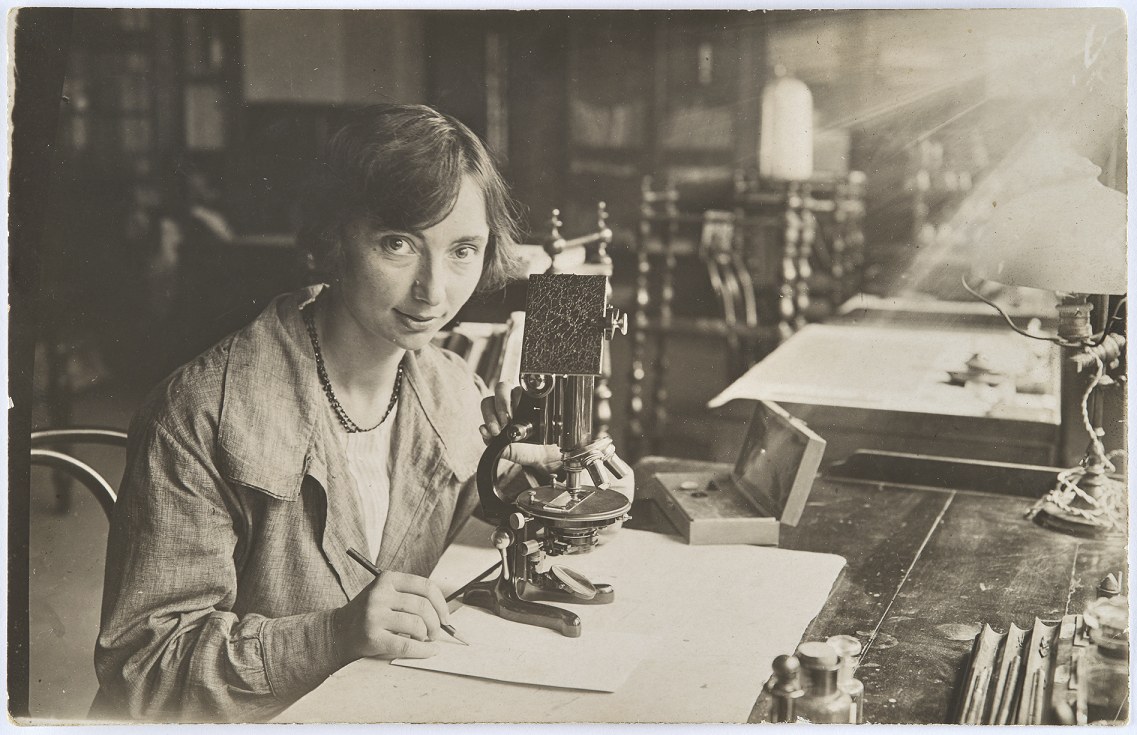
The Pordenone Natural History Museum is preparing for a special afternoon: a tribute to its illustrious patron, Silvia Zenari, in the year marking the 130th anniversary of her birth. The event, which is free of charge, will take place on Saturday 25 October at 5.00 pm.
The Councillor for Culture, Alberto Parigi: “I would like to highlight the importance of the Natural History Museum in two respects: firstly, its recent transformation into a fully accessible facility, thanks to improvements that enable all visitors, regardless of any cognitive or physical difficulties, to fully enjoy the museum’s spaces and exhibits. Secondly, the fact that it is increasingly becoming a lively and dynamic venue, capable of promoting initiatives and activities for everyone, and it is precisely in this context that our tribute to Silvia Zenari, after whom the museum is named, takes place.”
Silvia Zenari was a teacher, a speaker at scientific conferences, a scholar of botany and geology, and a pioneer in an era when science was still a forbidding field for women. Between 1895 and 1956, she climbed mountains with a notebook in one hand and a magnifying glass in the other, building up an extraordinary botanical archive of the Alps in north-eastern Italy. Her specimens, now housed in the Botanical Museum of Padua, have enriched the Triveneto Herbarium, making it a leading scientific resource.
The event at the Natural History Museum – led by experts Elena Canadelli, Associate Professor of the History of Science and Scientific Director of the Botanical Museum at the University of Padua, together with Valentina Boscariol, a PhD student in Biodiversity at the Universities of Palermo and Padua – will take participants on a journey through the Alpine peaks and historical herbariums, veritable ‘botanical time machines’ that enable us to study how plant biodiversity has changed over the decades and to reconstruct the stories of those who dedicated their lives to cataloguing nature.
Today, the Zenari collection represents one of the main areas of research at the Botanical Museum of Padua, with the ambitious aim of showcasing these treasures as part of our scientific, historical and cultural heritage, whilst highlighting the contribution of women to science.